
Plumbing Problems & Solutions
Low Water Pressure in Long Beach? 8 Causes and How to Fix Each One
One weak faucet or a whole-house drop — both trace back to a short list. Here is how to find yours in about ten minutes.
Quick Answer
Most low water pressure in Long Beach comes from a clogged aerator, a failing faucet cartridge, a partly closed main valve, or a worn pressure regulator. Test one indoor tap and one outdoor hose bib: if both are weak, the loss is in your supply line, not the faucet. Under 40 psi at the bib means the house is starving for water, and the Long Beach plumbers at A1 Best Plumbing recommend tracing it before scale or a hidden leak does more damage.
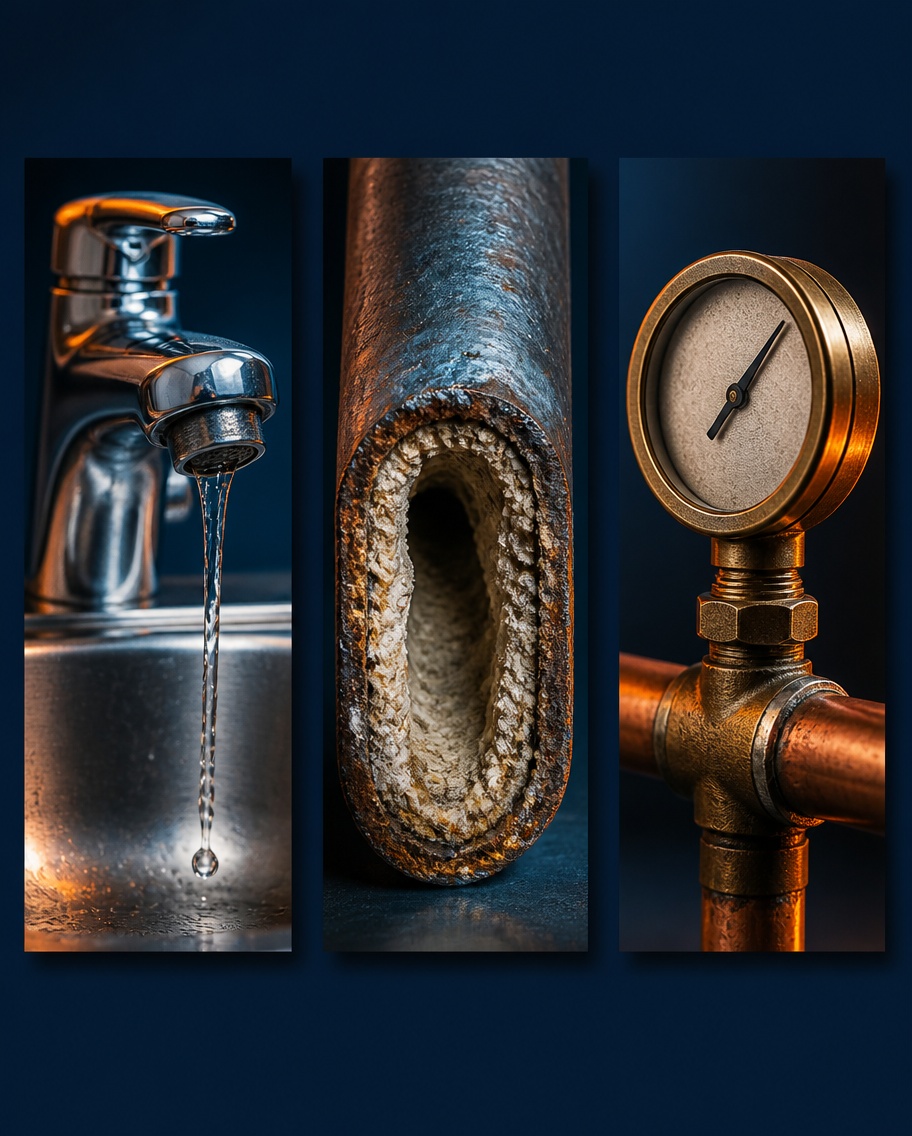
Find out where the pressure is lost
Pressure is a chain, and the weakest link sets what you feel at the shower head. Turn the kitchen cold tap on fully, then open an outdoor hose bib. Strong bib, weak tap: the problem is inside that one fixture. Both weak: you have a supply-side restriction shared by the whole house — meter, main valve, regulator, or service line. That single test removes half the list below.
Eight causes, ranked by how often we find them
1. A clogged aerator screen
Hard water plugs the little mesh cap on the spout within a year or two. Unscrew it, soak it in white vinegar for an hour, rinse, and reinstall. If flow returns, the fix cost you a jar of vinegar.
2. A failing single-handle cartridge
When one shower is weak and the rest of the house is fine, the cartridge inside the handle is scaled or swollen. You often feel it first: the handle stiffens and the temperature is hard to set.
3. A partly closed or failing main valve
Gate valves that have not moved in twenty years can look open while sitting half shut. Long Beach plumbers recommend exercising the main valve yearly so it does not seize at the worst moment.
4. A worn pressure regulator
The bell-shaped brass PRV near the service entrance steps municipal pressure down to a safe range. After fifteen to twenty years the diaphragm stiffens and flow chokes. In a pre-1990s Long Beach home that has never replaced one, it belongs on the suspect list.
5. Galvanized pipe scale in older homes
Much of Long Beach was built between 1920 and 1960, when galvanized steel was standard. It rusts from the inside out until the bore narrows to a fraction of its original size. Rusty brown water after a vacation is the tell. Nothing restores it — the answer is a repipe in copper or PEX.
6. A filter, softener, or shutdown device in the path
A spent cartridge, a softener left in bypass, or an overdue sediment pre-filter can choke the whole house. Check pressure before and after the unit; if it drops across the filter, that is the problem.
7. A neighborhood or utility event
Hydrant flushing, main breaks, and construction shutoffs drop pressure for blocks at a time. If a neighbor has the same symptom, report it to the water department instead of paying for a repair you do not need.
8. A hidden or slab leak
This is the cause homeowners miss, and the costliest. A pinhole under the slab bleeds pressure while adding volume to your bill. The signature: pressure that fades over weeks, a climbing bill with no new usage, and a meter that keeps ticking with every fixture off. The Long Beach plumbers at A1 Best Plumbing recommend a meter test before any repipe decision, because new pipe will not fix a leak under the floor.
What normal water pressure looks like
Pressure is measured in psi with a screw-on gauge from any hardware store. Codes cap residential pressure at 80 psi; fixtures are happiest between 50 and 60. Above 80 you shorten the life of every valve and hose; below 40, showers and appliance fill times suffer.
| Reading at hose bib | What it usually means | Next step |
|---|---|---|
| 50–60 psi | Normal — loss is inside a fixture | Clean aerators, test cartridges |
| 40–49 psi | Borderline; regulator or filter | Check PRV and filter cartridges |
| Under 40 psi | Supply restriction or hidden leak | Call for diagnosis |
| Over 80 psi | Failed or missing regulator | Replace the PRV |
The ten-minute homeowner check
- Compare one cold tap against one hose bib.
- Clean the aerator on the weakest fixture.
- Confirm the main shutoff is fully open, not just visually open.
- Shut every fixture off and watch the meter for two minutes.
- Replace any filter cartridge older than six months.
- Ask a neighbor whether they noticed the same drop.
When low pressure is an emergency
Slow flow is an inconvenience. A sudden drop paired with ceiling or baseboard staining, the sound of running water with everything off, or a bill that jumped by a third is not — those point to a leak or failing valve and get worse by the hour. A1 Best Plumbing answers the phone around the clock and confirms pricing before work starts, with no overtime rate on nights or weekends.
Key Takeaways
- Test one tap and one hose bib first — the comparison separates a fixture problem from a house problem.
- Clogged aerators and worn cartridges are the most common cause and the cheapest to fix.
- Under 40 psi means a supply restriction; over 80 psi means a failing regulator.
- Galvanized pipe in pre-1960 homes cannot be cleaned back to full flow — it has to be replaced.
- A meter that spins with every fixture off is a leak that no fixture repair will cure.
Frequently asked questions
Why is only my hot water pressure low?
A restriction on the hot side — a scaled cartridge, a clogged heater outlet, or a failing dip tube. Test hot and cold at the same faucet to confirm before buying parts.
Does a water softener lower pressure?
A working unit costs a few psi at most. A softener in bypass, a clogged resin bed, or a spent pre-filter can drop it much further.
Can low pressure damage my plumbing?
Low pressure itself does not. The causes do: scale, corrosion, and undetected leaks worsen with time, while pressure above 80 psi bursts hoses and valves.
Weak flow that will not come back?
A1 Best Plumbing has served Long Beach and 22 surrounding cities for 30+ years. Our licensed plumbers diagnose pressure problems with gauges and leak detection, not guesswork, and confirm the price before work begins.
Call 562-268-5480 Or request service online and we will call you back.
About this guide: Written by the licensed plumbing team at A1 Best Plumbing (DBA A1 Best Plumbing & Restoration), Long Beach, CA. Licensed, bonded, and insured.